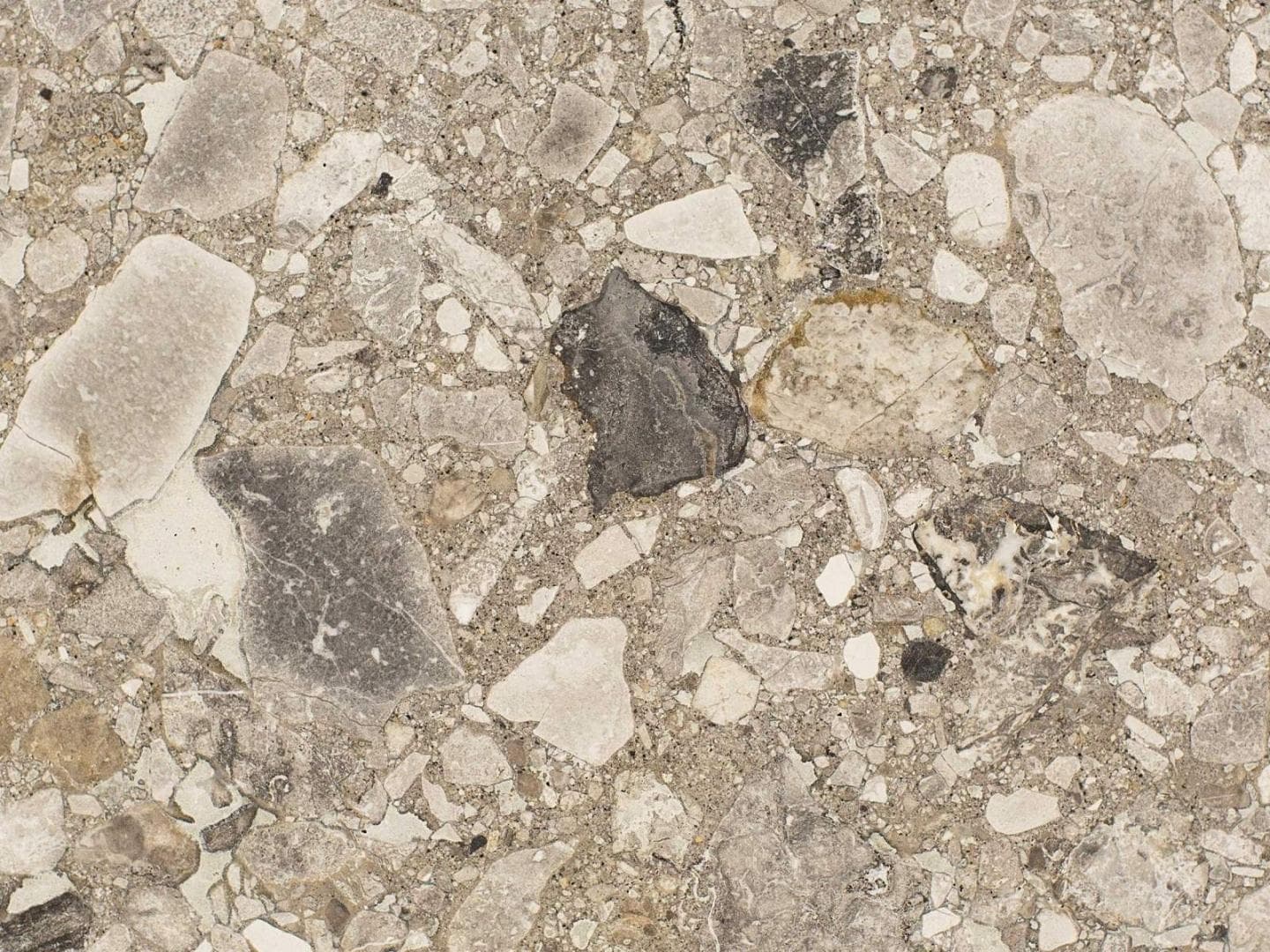
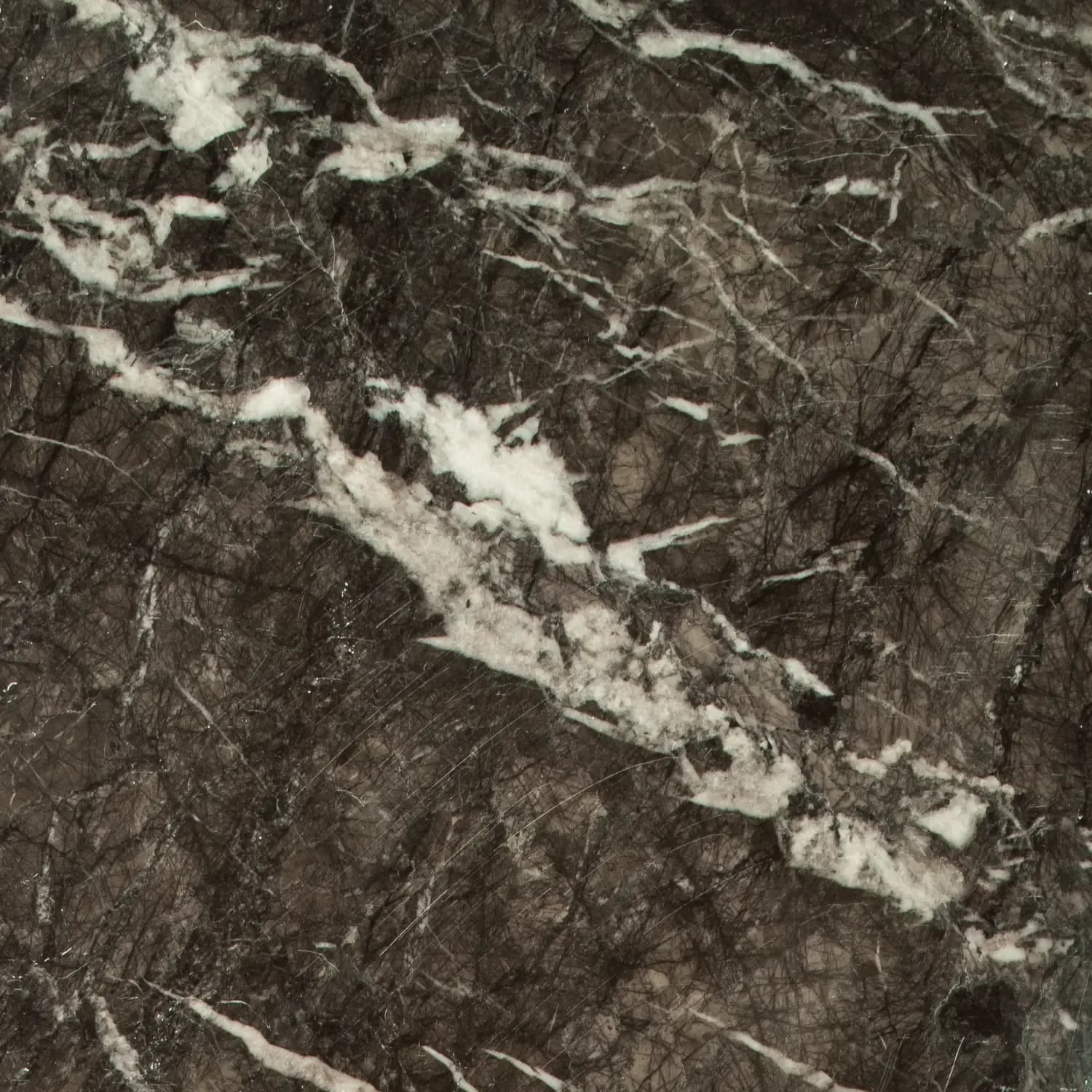
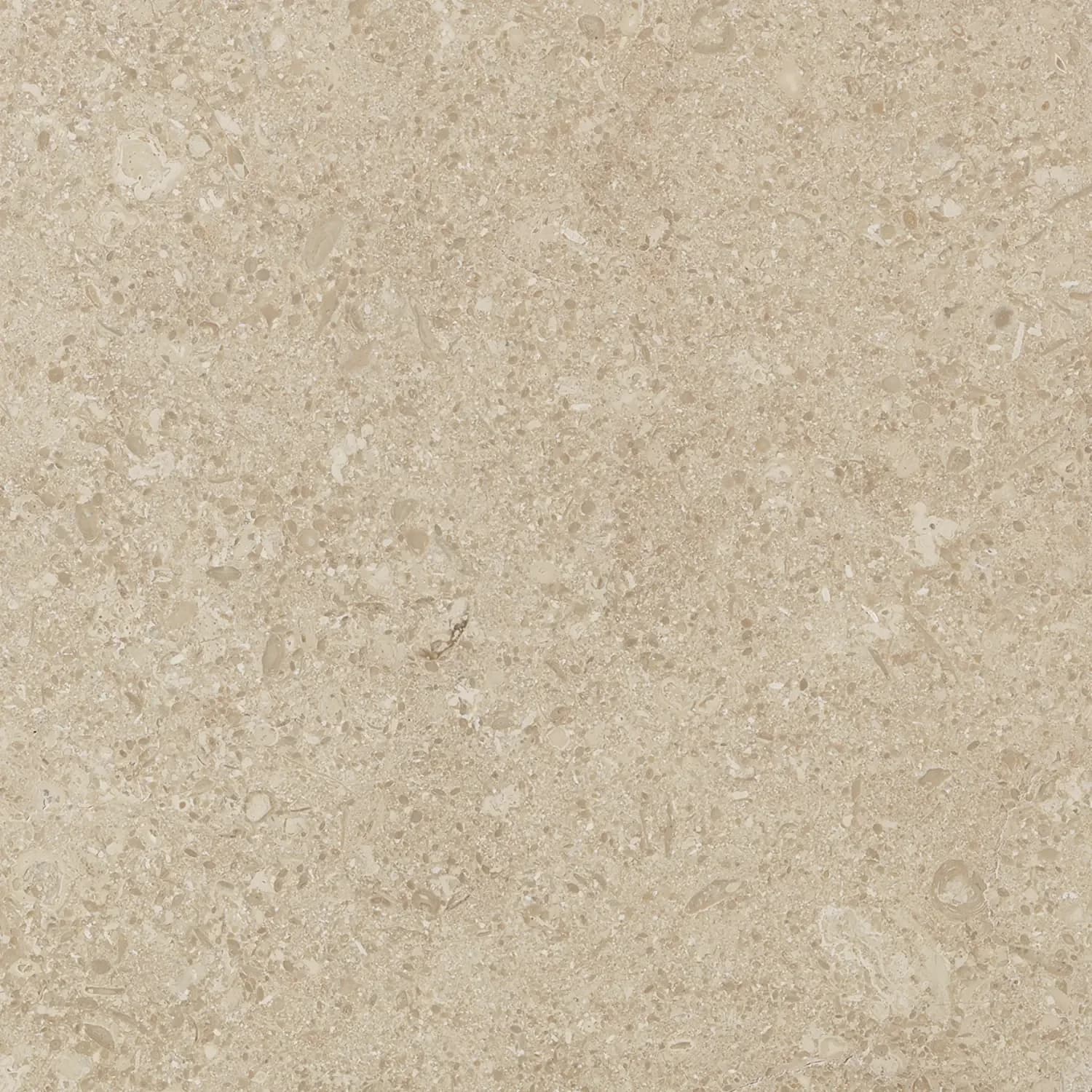
Some stones are quiet. Ceppo di Gré is not. It is a conglomerate, a stone built from rounded pebbles set into a fine matrix, and the result is a surface unlike anything else in the specifier's palette: a calm grey field scattered with darker inclusions, like a slab of frozen riverbed. It has defined the look of Milan for centuries, and once you have seen it you notice it everywhere in the city.
It is also one of the most-copied stones in the world, which creates a trap for the unwary specifier. We publish the real Ceppo di Gré and source it at the block, so this guide sets the record straight: what the genuine stone is, why the porcelain imitations exist, how to finish it, and where it belongs.
What Ceppo di Gré actually is
Ceppo di Gré is a natural conglomerate stone quarried in Lombardy, in the Bergamo and Brescia area of northern Italy. Geologically, a conglomerate is a sedimentary rock made of rounded clasts, pebbles and stone fragments, cemented together in a finer natural binder. That structure is exactly what you see on the cut face: distinct pebbles suspended in a matrix, giving the stone its signature speckled, aggregate character.
The overall read is a soft grey field with darker grey and hazel pebble inclusions, calm from a distance and full of detail up close. It is a material with genuine depth, and it has been a defining stone of Milanese architecture, used on facades, plinths, bases, paving, and detailing across the city.
The porcelain problem
Here is the part nobody selling porcelain wants you to dwell on. Ceppo di Gré's look is so recognisable and so desirable that it has spawned an entire category of porcelain tiles printed to imitate it. Walk a tile showroom and you will see "Ceppo" porcelains everywhere.
Those are ceramic reproductions, not stone. They print a photograph of the aggregate onto a tile. From across a room in the right light they can pass; in the hand, and over time, they do not. They lack the depth, the tactility, the true edge, and the genuine variation of quarried stone, and they will never patina like the real thing.
There is nothing wrong with specifying porcelain when porcelain is what you want. The problem is specifying porcelain while believing, or letting a client believe, that it is Ceppo di Gré. If provenance and authenticity matter, and for a premium project they usually do, insist on the natural stone and confirm the source. That is precisely the kind of clarity a sourcing studio exists to provide.
Technical properties
Ceppo di Gré is a robust building stone, and its conglomerate structure gives it some useful properties, though the specific selection matters as always.
Hardness and durability. The mix of hard pebbles in a sound matrix gives good wear resistance, which is part of why it has served as Milanese paving and facade stone for so long.
Density and absorption. Sound for its class, but as a conglomerate the behaviour depends on the matrix and the specific bed, so exterior and floor use should be backed by test data on the actual material.
Weathering and dirt tolerance. This is a genuine strength. The busy, pebbled surface hides dirt, minor staining, and the effects of weathering far better than a plain stone, which is a real advantage on large urban elevations and high-traffic floors.
Reserve from a known bed and specify to tested numbers. The category name covers a real natural material with real variation.
Finishes and where they belong
Because the conglomerate pattern is doing the aesthetic work, finishes on Ceppo di Gré are chosen mostly for grip and application.
Honed and sawn show the pebbled structure cleanly and evenly, the default for interior floors and cladding.
Brushed and bush-hammered emphasise the aggregate and add grip for exterior paving, wet areas, and facades.
Sandblasted gives a matte, understated, civic surface.
The finish changes the touch and the grip more than the look. Choose it to suit the job, then let the stone's pattern speak.
Where Ceppo di Gré belongs
Outdoors, Ceppo di Gré is a facade and paving stone with genuine Milanese pedigree. Its dirt tolerance and characterful surface make it excellent for ventilated cladding, plinths and bases, and urban paving. Detail it as ventilated cladding with sound drainage, seal appropriately, and get block-specific data for exposed conditions.
Indoors, it makes a genuinely distinctive floor. In a hotel lobby or a retail space, a Ceppo di Gré floor hides foot-borne traffic and gives a floor with real identity, which is why it appears in our hotel lobby flooring guide as a characterful, hard-wearing option. It also works beautifully as a feature wall or a reception face where you want a surface with depth and movement.
Specifying the real thing
The whole point of Ceppo di Gré is that it is real. A printed imitation of a conglomerate is a photograph of depth, not depth itself, and on a premium project that difference reads. If you are drawn to the Ceppo look, the honest path is to specify the natural stone, confirm the quarry source, and get physical samples so you and your client see the genuine material before committing.
Because the pattern varies across the bed, samples should be a decent size and viewed in the actual light of the space. A small offcut undersells how the aggregate reads across a real floor or elevation.
If you are specifying Ceppo di Gré, and want to be sure you are getting quarried Lombardy stone rather than a porcelain copy, start a project brief and we will source the genuine material in the right finish for your application. Or request samples of the real stone and compare it against whatever imitation you have been shown.