Most stone families give you one colour and a couple of finishes. The Atlantic limestones give you a tonal palette: a warm Beige, a cool Grey, a bright White, and a blended Mix, all from the same Portuguese limestone tradition, all sharing the same dense, even character. For an architect, that is a genuinely useful tool. You can compose an entire building in one coherent stone language while shifting the tone from room to room, or element to element, without ever leaving the family.
We publish the Atlantic limestones and source them at the block, so here is the specifier's guide: what the family is, how the four tones differ, the shared technical picture, and how to compose with them.
A family, not a single stone
Atlantic limestone is best understood as a related range rather than one product. The four faces, Beige, Grey, White, and Mix, come from the same Portuguese limestone lineage and share a common dense, fine, even structure. What varies is the colour and the tonal blend.
This is the opposite of the usual problem in stone specification, where matching materials from different quarries means fighting differences in density, finish behaviour, and ageing. With the Atlantic family, the tones already belong together, so a scheme that moves from a warm floor to a cool facade to a bright bathroom stays coherent because the underlying stone is the same.
The four tones
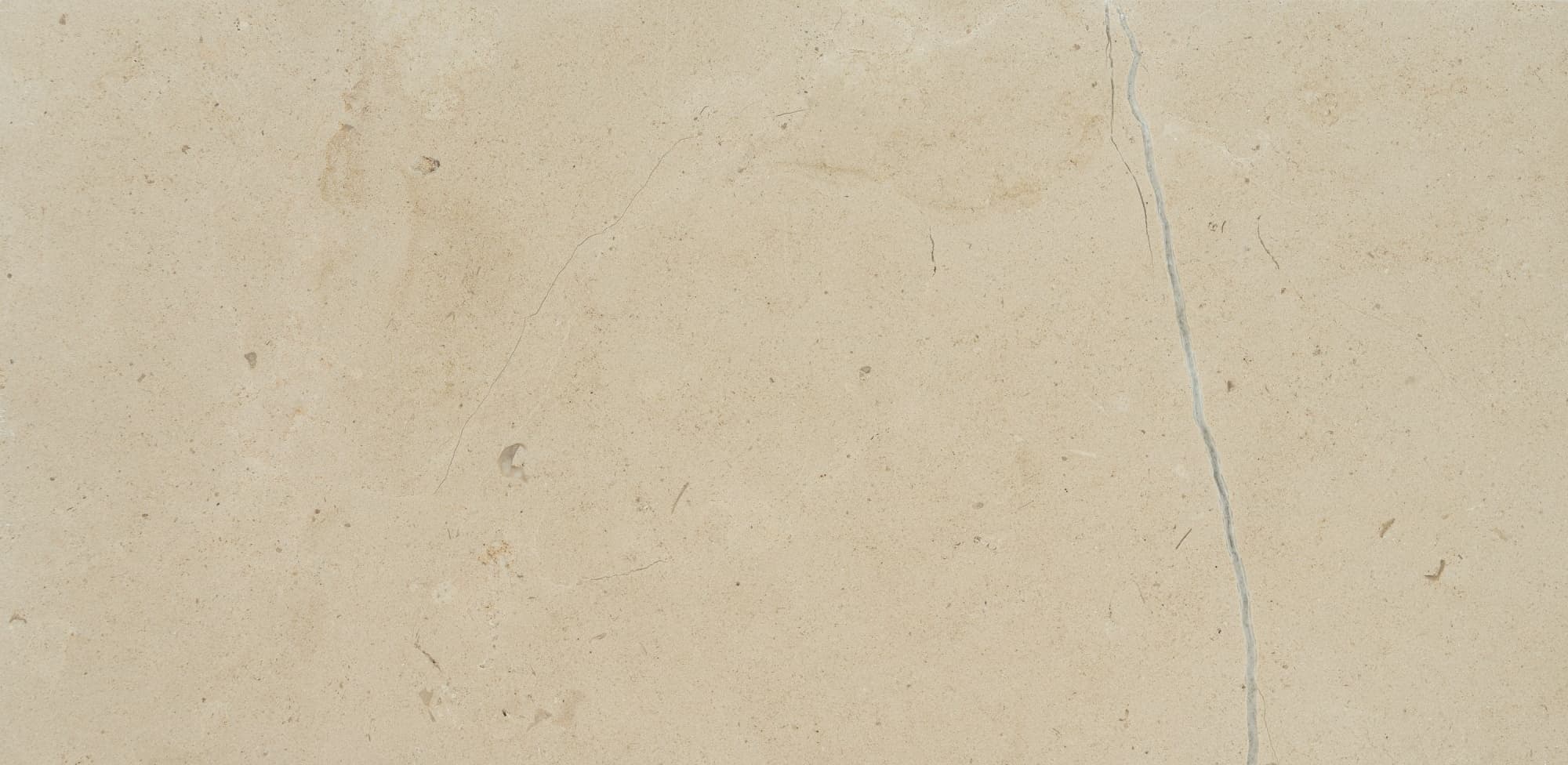
Atlantic Beige is the warm, neutral ground: a versatile beige that sits calmly under almost any palette, the safe and elegant default for floors and cladding.
Atlantic Grey is the cool, contemporary face: a soft grey that suits modern and minimal schemes and reads clean and current. It is the one to reach for when the scheme wants restraint and coolness rather than warmth.
Atlantic White is the palest and brightest: a light limestone that opens up a space and gives the calm, luminous quality of pale stone without the fragility of white marble.
Atlantic Mix blends the tones for more movement and character, giving a floor or wall that reads livelier and more varied while staying within the family.
Because the difference between them is tonal rather than structural, the choice among them is a design decision about warmth, coolness, and brightness, not a performance one.
Technical properties
The Atlantic limestones are dense, capable building stones across the family, though the specific bed governs the exact numbers.
Density and hardness. Dense, medium-hard limestones, rated for interior floors and cladding and capable of exterior work. Being calcite-based, they etch with acid and scratch under abuse.
Water absorption. Low for limestone, supporting exterior use with the right detailing; a cold-climate facade wants the specific block's absorption and freeze-thaw figures.
Consistency. Good tonal consistency within each face, which matters when covering large floors and elevations. The Mix, by design, carries more variation.
Reserve from a known bed and specify to tested numbers, and where you are matching tones across a project, sample all the faces together so the family reads as intended.
Finishes and where they belong
Honed is the interior default across all four tones, giving a smooth, even face for floors and cladding that wears gracefully.
Brushed and bush-hammered add grip and a tactile surface for exterior paving, wet areas, and facades.
Sawn and sandblasted give understated, civic surfaces for traditional and heavy-duty work.
Polished is available but off-brief for a family whose appeal is calm, even tone; keep it honed or textured.
Because the finish behaviour is shared across the family, a honed floor in Beige and a brushed facade in Grey will read as deliberate variations on one material, not as different stones.
Composing with the Atlantic family
This is where the family earns its keep. A few worked ideas:
A warm Beige honed floor grounds the interior, while a cool Grey brushed facade gives the exterior a contemporary face, all in one stone language.
A bright White in bathrooms and a warm Beige in living spaces gives tonal shift without discord.
Mix as a characterful feature floor in a lobby or reception, with plain Beige or Grey elsewhere, gives a focal point that still belongs to the scheme.
For the exterior elements, apply the usual limestone discipline of dense selection, textured finish, sealing, and drainage detailing; our exterior cladding guide sets out that framework. For interior floors, the honed-for-even-wear logic in our hotel lobby flooring guide applies directly.
Sampling the Atlantic family
Because the whole point is tonal coherence, sample the faces you intend to use together, at a decent size, in your intended finishes, and view them in the actual light of the spaces. Tone shifts noticeably between warm interior light and cool daylight, so a beige that reads warm indoors may read differently on a north facade.
If you are composing a project in the Atlantic family, start a project brief and we will source the tones, beds, and finishes that hold together across your building, with honest guidance on where each belongs. Or request samples of Beige, Grey, White, and Mix and compose with the real stones in hand.