Travertine vs Limestone: Differences, Uses, and How to Choose
Travertine is a form of limestone, but it forms, looks, and performs differently. An application-by-application guide covering Roman and Turkish travertine.
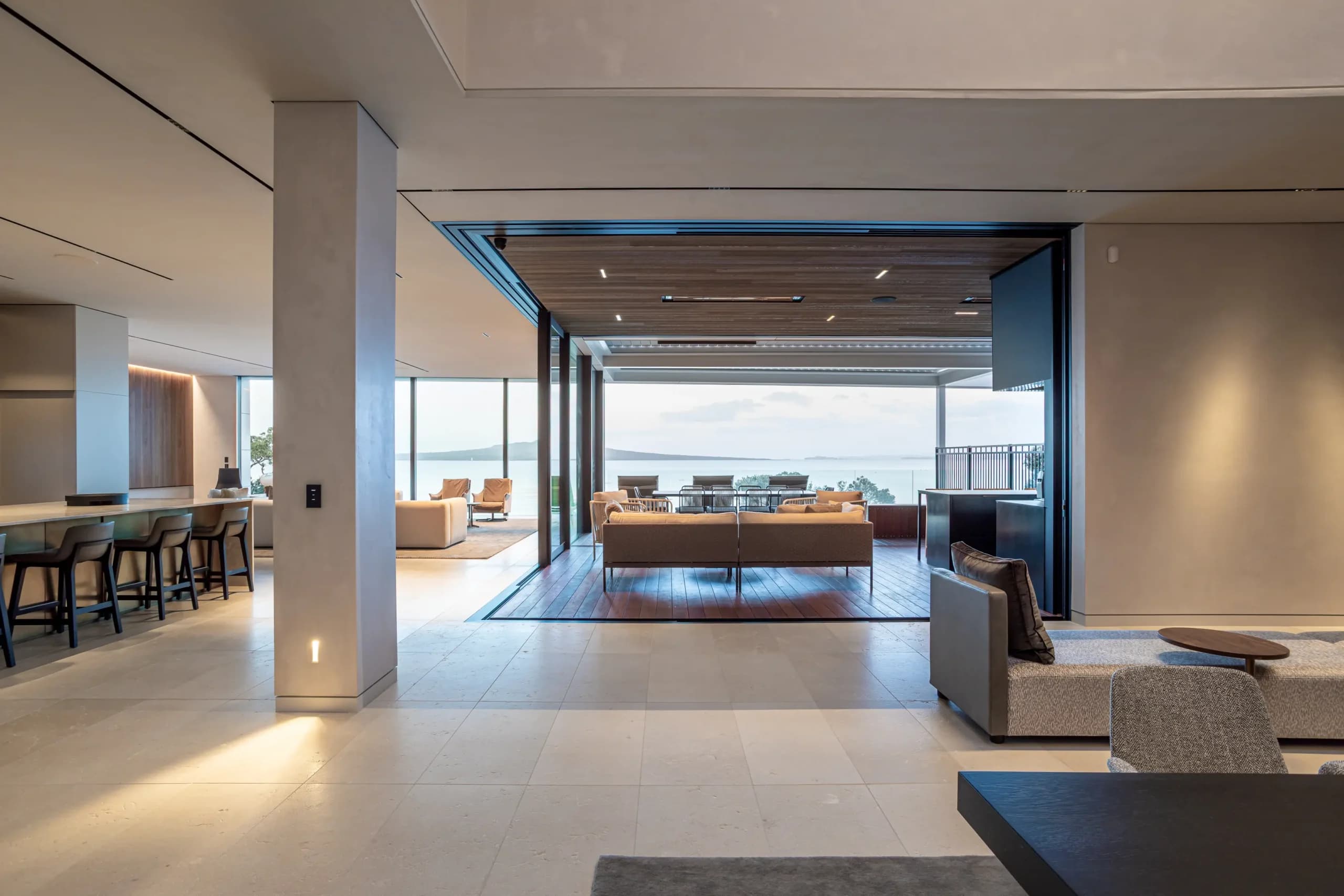
Travertine vs limestone is one of the most common comparisons in natural stone, and it starts with a surprise: travertine is a form of limestone. Both are sedimentary rocks made mostly of calcium carbonate, so the difference between limestone and travertine is not their chemistry. It is how each stone formed, and what that formation does to its structure, its surface, and its behaviour in a building.
This guide compares travertine vs limestone where the two are most often weighed against each other: interior flooring, bathrooms and showers, pool decks, exterior cladding, and patios. It covers the two travertine origins most often compared, Italian (Roman) and Turkish, alongside the Italian and Portuguese limestones in the Lithos catalogue, and ends with a simple way to choose.
The difference between limestone and travertine starts with geology
Most building limestone is marine. It formed from shells, skeletal fragments, and carbonate mud that settled on ancient sea floors and were compacted and cemented over geological time. That is why many limestones show fine fossil or shell detail, and why the best of them read calm and even across a large surface.
Travertine forms on land. Groundwater carrying dissolved calcium carbonate rises at springs, often hot springs, loses carbon dioxide as it reaches the surface, and deposits calcite in successive layers. Gas bubbles, plant matter, and uneven deposition leave voids in the stone, and the layering gives it bands. Those two features, holes and banding, are travertine's signature.
How the block is cut decides which of them you see:
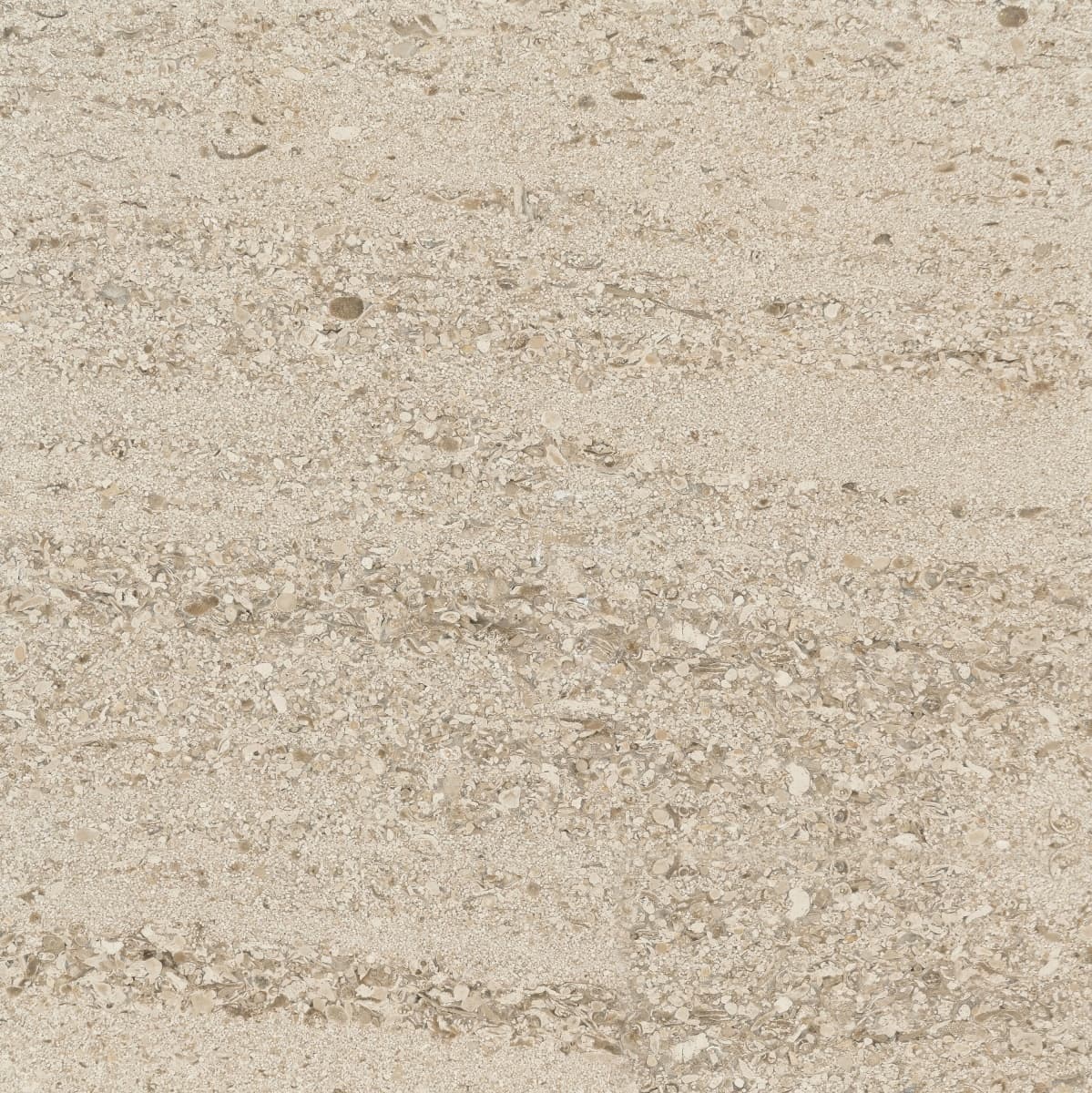
Vein cut slabs are sawn across the layers, so the bands show as long parallel lines. Roman Travertine Classico Vein Cut is a typical example: a warm cream base with linear banding.
Cross cut slabs, also called fleuri cut, are sawn along the layers, so the bands open out into a softer, cloudy pattern. Roman Travertine Classico Cross Cut shows the same cream tone as a more uniform, cloudy face.
Because both stones are calcite, both react with acid. Lemon juice, wine, vinegar, and acidic cleaners will etch travertine and limestone alike. That is chemistry, not a quality defect, and it applies to every stone in this comparison.
Travertine vs limestone: key properties compared
The two stones have separate ASTM specifications: ASTM C568, the Standard Specification for Limestone Dimension Stone, and ASTM C1527, the Standard Specification for Travertine Dimension Stone. Both set requirements for absorption, density, compressive strength, modulus of rupture, and abrasion resistance, measured with the same test methods, including ASTM C97 for absorption and density and ASTM C170 for compressive strength.
Property | Travertine | Limestone |
|---|---|---|
Governing specification | ASTM C1527 | ASTM C568 |
How the standard classifies stone | Class I (exterior) and Class II (interior) | Three density classes: I (low), II (medium), III (high) |
Formation | Calcium carbonate deposited by mineral springs | Mostly marine sediment, compacted and cemented |
Surface character | Natural voids and banding; supplied filled or unfilled | Generally more uniform; may show fossils or shell detail |
Pattern | Set largely by the cut: vein cut (linear) or cross cut (cloudy) | Set by the bed and grain of the chosen stone |
Acid sensitivity | Yes (calcite) | Yes (calcite) |
Performance data | Varies by quarry and bed; ask for test results | Varies widely by density class and bed; ask for test results |
Limestone's range is wide because C568 spans three density classes. Low-density limestone (Class I, 110 to 135 lb/ft³) may absorb up to 12% of its weight in water under the standard, while high-density limestone (Class III, above 160 lb/ft³) may absorb no more than 3% and must reach a compressive strength of at least 8,000 psi. The class you specify changes how a limestone behaves outdoors more than the word "limestone" does.
Travertine is not automatically more or less porous than limestone. Its voids are visible, but the stone between them can be compact, and filling closes the surface. The honest comparison is always stone to stone: ask for C97 absorption and density results and C170 compressive strength results for the bed you are actually buying, rather than a generic figure for the species.
Flooring: limestone vs travertine
For interior floors, both stones perform well when specified correctly, so the decision is mostly about character.
Travertine flooring reads warm, textured, and quietly animated. Filled and honed travertine gives a smooth, even surface with visible banding or cloud; unfilled or tumbled travertine is more rustic. Vein-cut Roman travertines such as Roman Travertine Bianco Crema Vein Cut, a pale cream with linear bands, lay out as long directional lines that suit corridors and plank-style layouts.
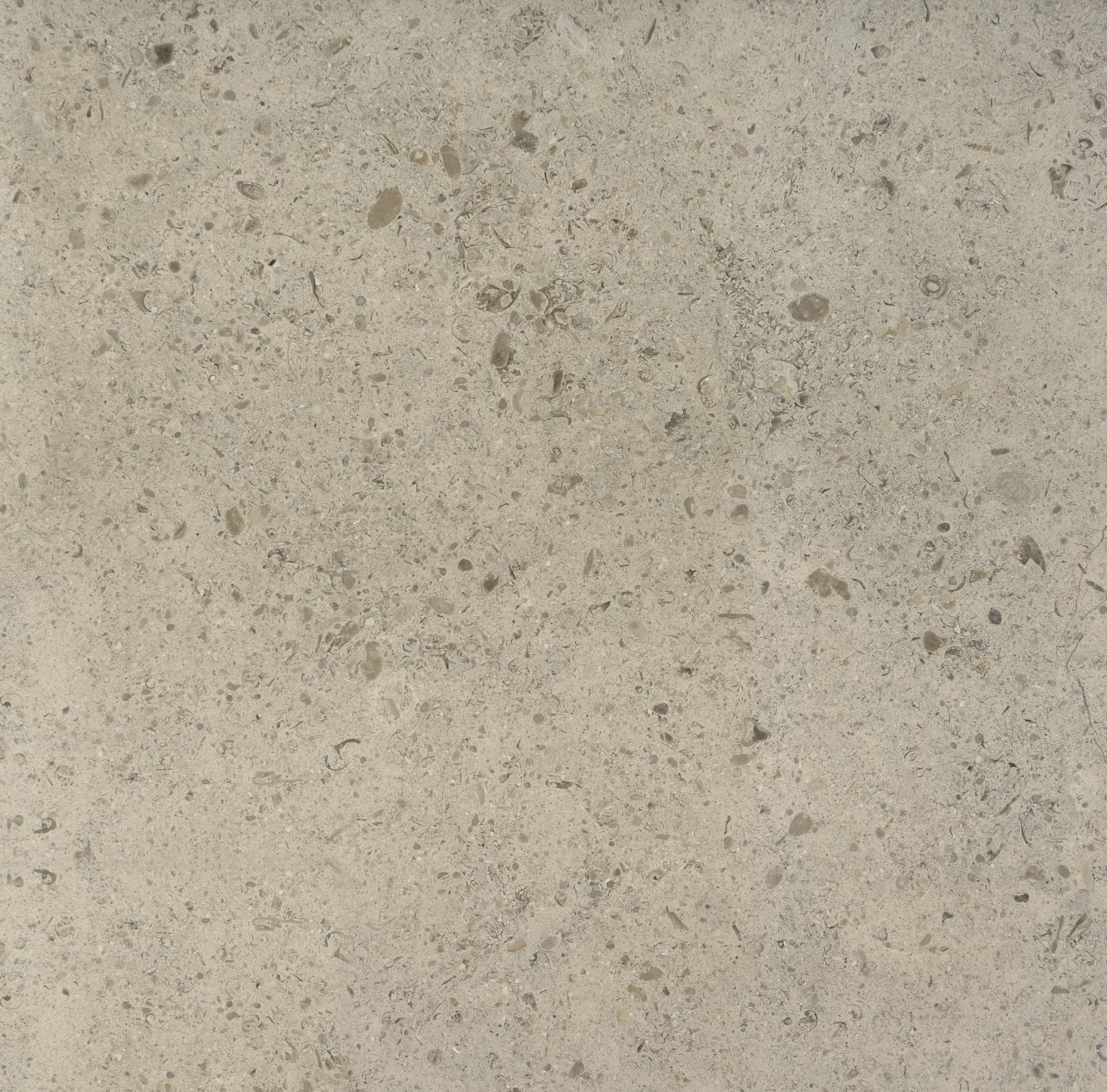
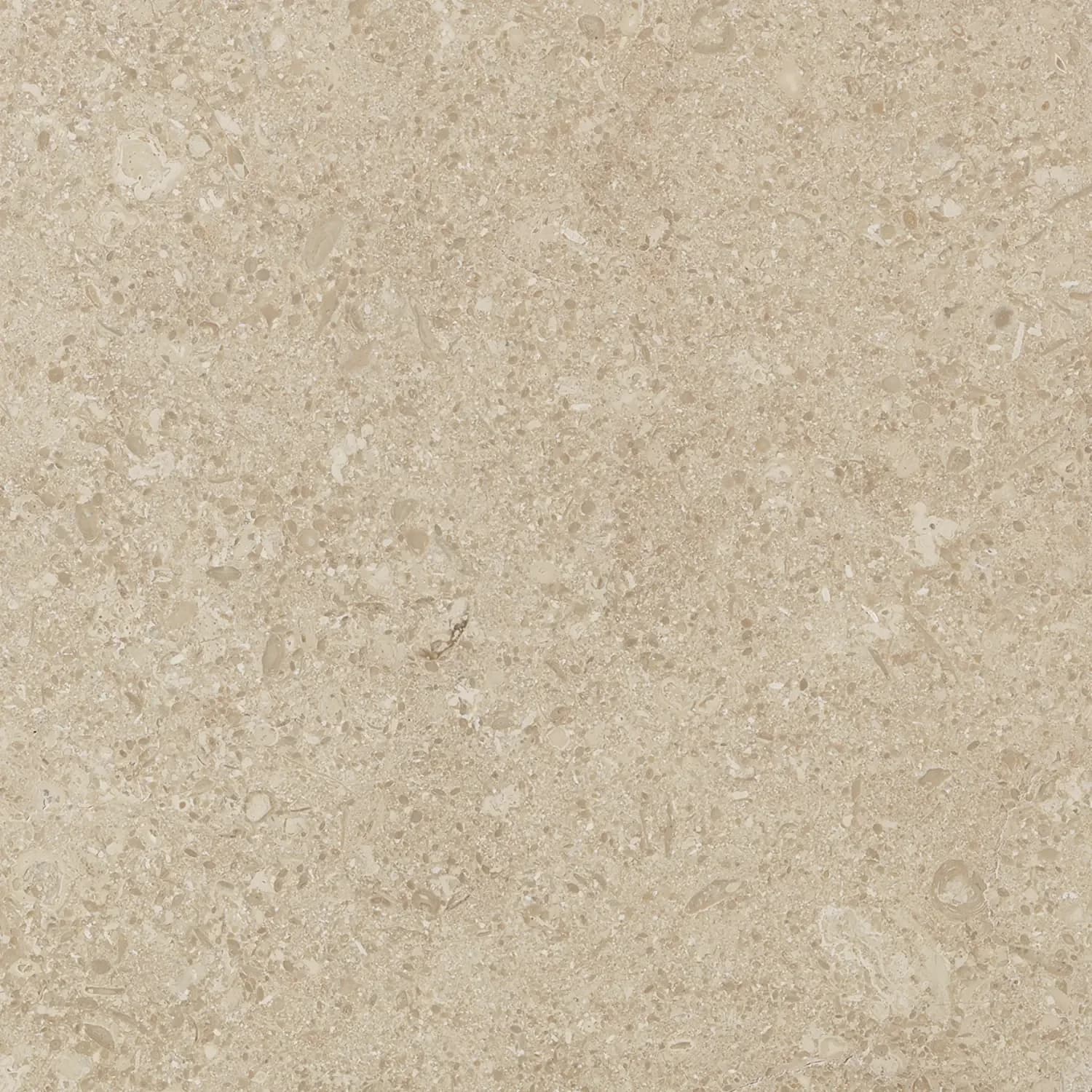
Limestone flooring reads calmer and more uniform. A warm, even Italian beige such as Grolla Beige or Pasubio Beige, or the shell-textured Portuguese Moca Cream Classic, gives a quiet field that lets furniture and architecture lead. Our limestone flooring guide covers finishes, formats, and stone selection for limestone floors in more depth.
Two specification points matter more than the species. First, finish: specify honed or brushed rather than polished, so traffic does not wear a shine into a dull path. Second, fills: on travertine floors, confirm the fill material and colour, because fills can wear or loosen under heavy traffic and may need topping up over the life of the floor. For busy commercial floors, select on abrasion-resistance data for the specific stone. Our guide to limestone, marble, and sandstone by application sets out the finish logic in more detail.
Bathrooms and showers: travertine vs limestone
Bathrooms put both stones under the same pressures: standing water, soap and body products, cleaning chemicals, and wet bare feet. The choice turns on porosity, finish, and maintenance more than on the name of the stone.
Porosity and fill. Travertine's voids are its signature, but in a bathroom they matter. Filled travertine, with the holes closed by resin or cementitious fill, gives a smooth surface that is easier to keep clean. Unfilled travertine holds water, soap residue, and dirt in its pores, so it is better kept to walls and dry areas.
Finish and slip. Polished stone of either type is slippery when wet and shows etching clearly, so it does not belong on a shower floor. Honed is the usual finish for bathroom floors outside the shower. For shower floors and wet thresholds, a textured face such as brushed, tumbled, or sandblasted grips better, and smaller formats add grip through extra grout joints. Verify the chosen finish against the slip test your jurisdiction requires.
Sealing, cleaners, and hard water. Both stones are calcite, so acidic bathroom cleaners, descalers, and most limescale removers will etch them. Hard water leaves mineral deposits that tempt people towards exactly those products. Seal with a penetrating sealer, squeegee shower walls after use, and specify pH-neutral cleaners in the maintenance documentation. Our guide to cleaning natural stone covers the routine.
Walls versus floors. Shower walls are the easier application: there is no foot traffic or slip risk, and water runs off. A shower floor asks more of the stone, from finish and falls to the waterproofing beneath it.
Why density helps. A dense, low-absorption limestone takes up less water and is more forgiving in a wet room than a soft, porous one. Under ASTM C568, high-density limestone may absorb no more than 3% of its weight in water, while low-density limestone may absorb up to 12%, so compare ASTM C97 absorption results for the specific stones.
Pool decks: limestone vs travertine
Travertine is the traditional pool-deck stone in warm climates, and for good reasons, but those reasons have more to do with finish and colour than with species.
Grip. Slip resistance comes from the surface finish. Tumbled, brushed, or unfilled travertine has a naturally textured face that grips when wet. Limestone can be just as safe in a textured finish such as brushed, sandblasted, or bush-hammered. A polished face of either stone is not a pool-deck finish. Ask for wet slip-resistance test results for the exact finish you plan to use.
Heat. How hot a paver gets in the sun depends mainly on its colour and surface. Pale travertines and pale limestones both stay more comfortable underfoot than dark stone. If heat matters, put samples of the shortlisted stones in direct sun and compare them by hand.
Water and chemicals. Pool water, salt, and cleaning chemicals are hard on any calcite stone. Choose a dense, low-absorption stone, avoid low-density (Class I) limestone, seal with a penetrating sealer suited to the exposure, and keep acidic cleaners away. Our guide to sealing natural stone explains which stones need it and how to plan maintenance.
In practice, a textured, pale travertine gives the classic resort look, and a textured, dense limestone gives a crisper, more architectural edge. Both need the same discipline on finish, drainage, and sealing.
Exterior cladding: which stone suits a facade?
For exposed facades, especially where there are freeze-thaw cycles, the deciding factors are the absorption, strength, and frost-resistance data for the specific stone, plus the fixing and drainage detail.
Dense limestone has a long record as a cladding stone. For a cool, contemporary elevation, Moleanos Azul is the densest variant of the Portuguese Moleanos family; for a warmer tone, Grolla Beige is recorded as frost-resistant in the Lithos stone data. Our guide to the best limestone for exterior cladding sets out the full selection framework.
Travertine is also a facade stone: Roman travertine has clad buildings in and around Rome since antiquity, and vein-cut panels make strong linear elevations. In cold climates, be more cautious. Open voids can hold water, fills can deteriorate outdoors, and ASTM C1527 distinguishes exterior (Class I) from interior (Class II) travertine. Specify exterior-class stone backed by test data, ask how the voids will be treated for exterior use, and detail for drainage.
The honest summary: dense limestone is usually the simpler exterior choice in harsh climates. Travertine works well in mild climates and sheltered positions, and in colder ones when the data for the specific stone supports it.
Patios and paving
Both stones make excellent patios. Look and climate decide.
Travertine pavers bring warmth and softness, especially tumbled, with rounded edges and an aged surface that suits Mediterranean and relaxed outdoor spaces. Unfilled travertine in a textured finish is often preferred outdoors, since exterior fills are one more thing to maintain.
Limestone paving gives a crisper, more structured result: sawn edges, consistent thickness, and tight joints. Textured finishes on dense limestones such as Grolla Beige suit contemporary terraces and pool surrounds where the paving continues the architecture.
Climate note. In freeze-thaw zones, choose paving on tested absorption and frost resistance, not on species. A dense, low-absorption stone of either type will outlast a porous one.
Sourcing travertine and limestone by origin
Origin shapes colour, availability, and the formats that are easy to obtain. For travertine, the two origins most often compared are Italy and Turkey.
Italian (Roman) travertine
Roman travertine, or travertino romano, is traditionally quarried around Tivoli and Guidonia, east of Rome. It is the stone of the Colosseum and of Bernini's colonnade at St Peter's Square. It is best known for warm cream and beige tones and for slabs produced in both vein cut and cross cut. The Roman travertines in the Lithos catalogue range from creams such as Classico and Bianco Crema to cooler faces such as Roman Travertine Ocean Blue Vein Cut, a grey base with linear banding.
Turkish travertine
Turkey is a major travertine producer, and Denizli province in the southwest, home to the travertine terraces of Pamukkale, is its best-known centre. Turkish travertine is sold in a wide colour range, often under trade names such as ivory or light, noce (walnut brown), silver (grey), and gold (yellow), and is widely produced as tiles, pavers, and tumbled formats as well as slabs. As with any origin, quality varies between quarries and producers, so grade, fill quality, and test data matter more than the country label.
Neither origin is inherently better. Italian travertine is valued for its Roman heritage and cream palette; Turkish travertine for its colour range and breadth of formats. Choose on the specific stone, the cut, the finish, and the data.
The Roman travertines linked in this guide are examples from our published catalogue. We can also source Turkish and other travertines on request, along with quarries, finishes, and origins that are not yet published, so if you have a stone in mind, send us a project brief.
Limestone origins: Italy and Portugal
The limestones most often weighed against travertine in the Lithos catalogue come from Italy and Portugal. Italian limestones such as Grolla Beige and Pasubio Beige offer warm, even beiges for large continuous floors and facades. Portugal's central limestone massif produces Moca Cream and the Moleanos family, from warm, shell-textured beige to cool blue-grey, with a long record in floors and facades.
The same applies to limestone: the Italian and Portuguese stones in this guide are a starting point, not the full range we can source.
Travertine vs limestone: how to choose
Choose travertine when:
You want visible texture, banding, and a warm, organic character
The project is a pool deck, courtyard, or patio in a mild or warm climate
A directional vein-cut pattern or a cloudy cross-cut face suits the design
You want the Roman heritage of Italian travertine or the colour range of Turkish travertine
Choose limestone when:
The stone should recede and read calm and even
The application is exposed exterior cladding in a harsh climate
You need precise sawn edges and tight joints for architectural paving
You prefer fossil or shell detail to open voids
Either works when:
The application is an interior floor, specified honed or brushed
The surface is a bathroom wall, fireplace, or feature wall
You want to pair them: limestone cladding with travertine paving is a natural combination, because the two share chemistry and palette
Whichever you choose, reserve from a known bed, specify to tested numbers for the block you are buying, and match the finish to the application.
How Lithos works
Lithos is a private natural stone sourcing studio for architects and interior designers, working on residential, hospitality, and commercial projects in marble, limestone, travertine, and specialty stone. We enter the work where it is useful: material direction, specification support, sourcing and comparison, and procurement coordination. On a travertine or limestone decision, that means comparing colour, movement, finish, and scale, then testing the visual choice against the application: absorption, slip, freeze-thaw exposure, thickness, format, fabrication, and maintenance.
We reach quarries, importers, fabricators, and suppliers directly to compare current lots, samples, and availability, and our recommendations are shaped by the project, not by stock on hand. Our stone index is an edited selection of materials we have handled or compared; if the right stone is not there, it simply has not been written up yet.
The scope follows the project. Some engagements stop at material direction and specification; others continue through samples, quotations, procurement, and delivery coordination. A short brief covering the intent, applications, constraints, and timing is enough to begin. Every brief is reviewed personally, and client names, budgets, and briefs stay private.
If you are weighing travertine against limestone for a project, start a project brief and we will recommend specific stones for each application, with honest guidance on where each belongs. Or request samples of Roman travertine and limestone in your intended finish and compare them side by side.



Notes from the studio
Occasional essays on material, sourcing, and the quiet craft of specifying stone. No noise.