Limestone Flooring Guide: Finishes, Tiles, Pros and Cons
How architects and interior designers read the data, match the finish to each zone, and choose between Portuguese, Italian, and Spanish limestones.
Limestone flooring is a staple of residential and hospitality interiors, and it is also easy to get wrong. The stone is rarely the problem. The problems are a polished finish in a walking path, a smooth face at a shower threshold, a tile too thin for its format, or a maintenance regime nobody wrote down.
This guide is for architects and interior designers specifying limestone for floors. It covers how to read technical data, which finish belongs in which zone, formats and underfloor heating, sealing, and how to choose among the Portuguese, Italian, and Spanish limestones in our catalogue. Where we quote numbers, they come from the data held for that specific stone. Where we do not hold tested figures, we say so.
Why specify limestone flooring
Limestone is a sedimentary stone made largely of calcite. On a floor that gives it a particular character: a calm, matte, even surface that reads warm under most light, takes a wide range of finishes, and ages quietly when it is detailed properly. Next to a heavily veined marble, it gives a quieter field that lets furniture and light do the work.
It also gives continuity. A dense limestone can run from entrance hall to kitchen to terrace, changing finish rather than material, and stair treads, thresholds, and skirtings can be cut from the same stone as the field.
Limestone flooring pros and cons
Before selection, be clear about what you are accepting.
In its favour:
Calm, consistent surface. Lower-variability selections keep a large floor coherent.
Wide finish range. The same stone can be honed in the living space, brushed in the bathroom, and textured outside.
Good with underfloor heating, when the installation is specified correctly.
Wears in, not out. Honed or brushed, there is no shine for traffic to lose.
What you are accepting:
It etches. Calcite reacts with citrus, wine, vinegar, and acidic cleaners, leaving dull marks. Sealing does not prevent this.
It absorbs. Porosity varies widely between limestones, and so does staining risk. Every limestone floor should be sealed.
It is softer than igneous stone. Grit scratches it, so entrance matting and routine cleaning matter.
The category is broad. “Limestone” covers dense, hard-wearing stones and soft, interior-only ones. You specify a stone and a bed, not a category.
In a kitchen the etching point matters most. Limestone flooring in a kitchen is workable, but specify honed or brushed rather than polished, since a matte face disguises etch marks, and write pH-neutral cleaning into the handover.
How to read limestone technical data for floors
A data sheet is only useful if you know which lines matter for a floor. These are the ones to look for, with the European (EN) and American (ASTM) test methods usually cited against them.
Apparent density (EN 1936, ASTM C97). Higher density generally means a tighter, harder-wearing stone. It is the first filter for a floor.
Water absorption and open porosity (EN 13755, EN 1936, ASTM C97). Lower is better for staining, wet areas, and exterior use, and it decides how hard the maintenance regime must work.
Compressive and flexural strength (EN 1926, EN 12372, ASTM C170, ASTM C880). Flexural strength governs how the stone behaves in thin sections, large formats, and over imperfect substrates.
Abrasion resistance (EN 14157, ASTM C1353). An indicator of how the surface stands up to foot traffic. Check the method and unit before comparing two stones; the methods are not interchangeable.
Frost resistance (EN 12371). Essential if the floor continues outside where freeze-thaw occurs.
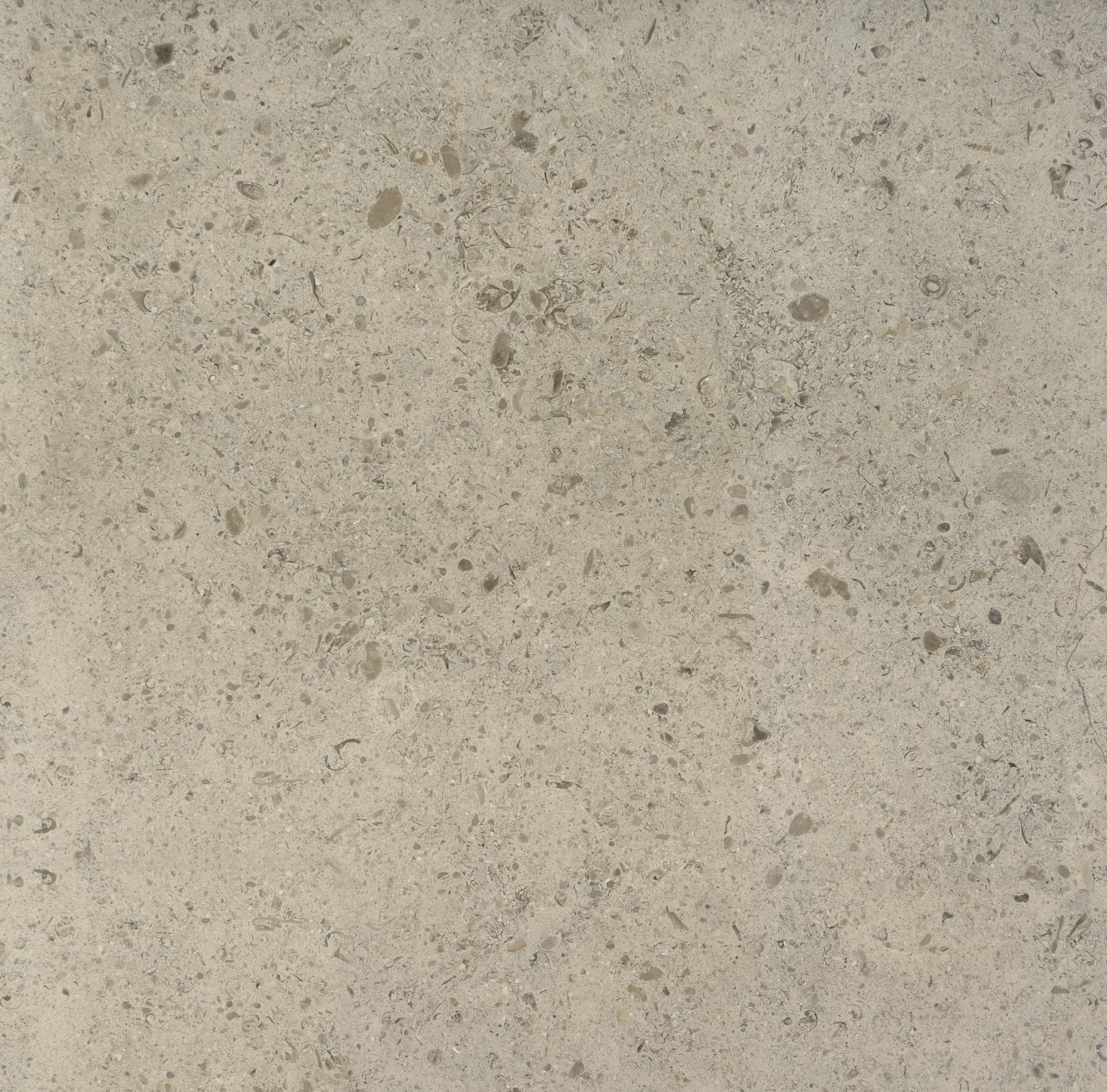
This is what our catalogue records for two of the Italian limestones with installed floor photography:
Property | Pasubio Beige | Grigio Olivo |
|---|---|---|
Density (kg/m³) | 2,680 | 2,660 |
Open porosity (%) | 0.7 | 1.5 |
Water absorption (%) | 0.3 | Not recorded |
Compressive strength (MPa) | 250.3 | Not recorded |
Flexural strength (MPa) | 13.2 | 16 |
Abrasion (value as recorded) | 18.5 | 19 |
Frost resistant | Yes | Yes |
Both are dense stones with low porosity and are recorded as frost resistant, which is why they suit floors that run from interior to terrace. Where a line says “not recorded”, ask for the test certificate rather than assuming. For most of the Portuguese and Spanish limestones below we do not yet publish figures, so request certificates for the specific bed before committing a project to them.
Remember too that a data sheet describes the sample tested, not every block in the quarry, so tie the specification to a named bed or selection.
Finishes for limestone flooring
The finish decides grip, how wear and etching read, and how the floor is cleaned. Choose it by zone, then check the swatch in the actual stone. For a wider comparison across stone types, see our guide to honed, flamed, and brushed finishes.
Honed limestone flooring
Honed is the interior default: ground flat to a smooth, matte face without reflective shine. It wears evenly because there is no polish to lose in the walking path, and it disguises etching far better than polished. Most limestones in our catalogue are available honed, from Pasubio Beige to Moleanos Fine Grain. For dry interior floors, living spaces, and bedrooms, start here.
Brushed and sandblasted & brushed
Brushing with abrasive brushes softens the surface into a gentle, tactile texture that grips better than honed while staying comfortable barefoot. Sandblasted & brushed goes a step further: the face is blasted to open the texture, then brushed to take the sharpness off. Pasubio Beige, Grigio Olivo, and Grolla Beige all carry a sandblasted & brushed swatch, and most of our installed Pasubio Beige floor photography is in this finish. Plain brushed is also offered on Atlantic Beige, Ataija Azul, and Moleanos Fine Grain. The Spanish equivalent you will see on Atria and Azul is Envejecido, an aged, brushed-type surface.
Tumbled
Tumbled stone is aged in a drum so the edges soften and the face takes on a worn character. It suits traditional schemes and rooms where a new floor should look as though it has always been there, and is generally a tile-format finish. Tumbled swatches exist for Atlantic Beige, Ataija Azul, and Moleanos Fine Grain. Expect a more open surface that holds dirt in its texture, and plan the cleaning regime accordingly.
Polished limestone flooring
Polished limestone flooring exists, and Atlantic Beige, Grigio Olivo, Grolla Beige, and Moca Cream Classic all have polished swatches. Polish deepens colour and reflects light, but on a floor it is the least forgiving option: traffic abrades it into dull paths, etching shows as matte marks, and it is slippery when wet. Reserve it for dry, low-traffic feature areas, and budget for periodic re-polishing.
Bush-hammered, flamed, and heavier textures
For exterior paving and external wet zones, heavier textures give the grip you need. Pasubio Beige and Grigio Olivo both offer bush-hammered, micro bush-hammered, and flamed; Grolla Beige offers bush-hammered and flamed. Flaming is less predictable on limestone than on granite, so approve it from a sample in the actual stone.
Slip resistance: where each finish belongs
Slip resistance is a finish decision more than a stone decision. We do not publish slip values against these finishes, so treat the table as a starting point and verify the specified finish against the test your jurisdiction requires: in the US, usually wet dynamic coefficient of friction (DCOF) under ANSI A326.3; in the UK and much of Europe, the pendulum test (EN 14231 or BS 7976), sometimes alongside the DIN 51130 ramp test. Test on the actual stone: the same finish name performs differently on different limestones.
Zone | Start with | Avoid |
|---|---|---|
Living spaces, bedrooms, corridors | Honed | — |
Kitchens | Honed or brushed | Polished |
Entrance halls and high-traffic areas | Honed or brushed, with entrance matting | Polished |
Bathrooms and shower floors | Brushed or sandblasted & brushed | Polished; honed at shower zones |
Pool surrounds and external wet zones | Bush-hammered, micro bush-hammered, or flamed | Honed, polished |
Terraces continuing from interiors | The same stone in a textured finish | Smooth finishes outside |
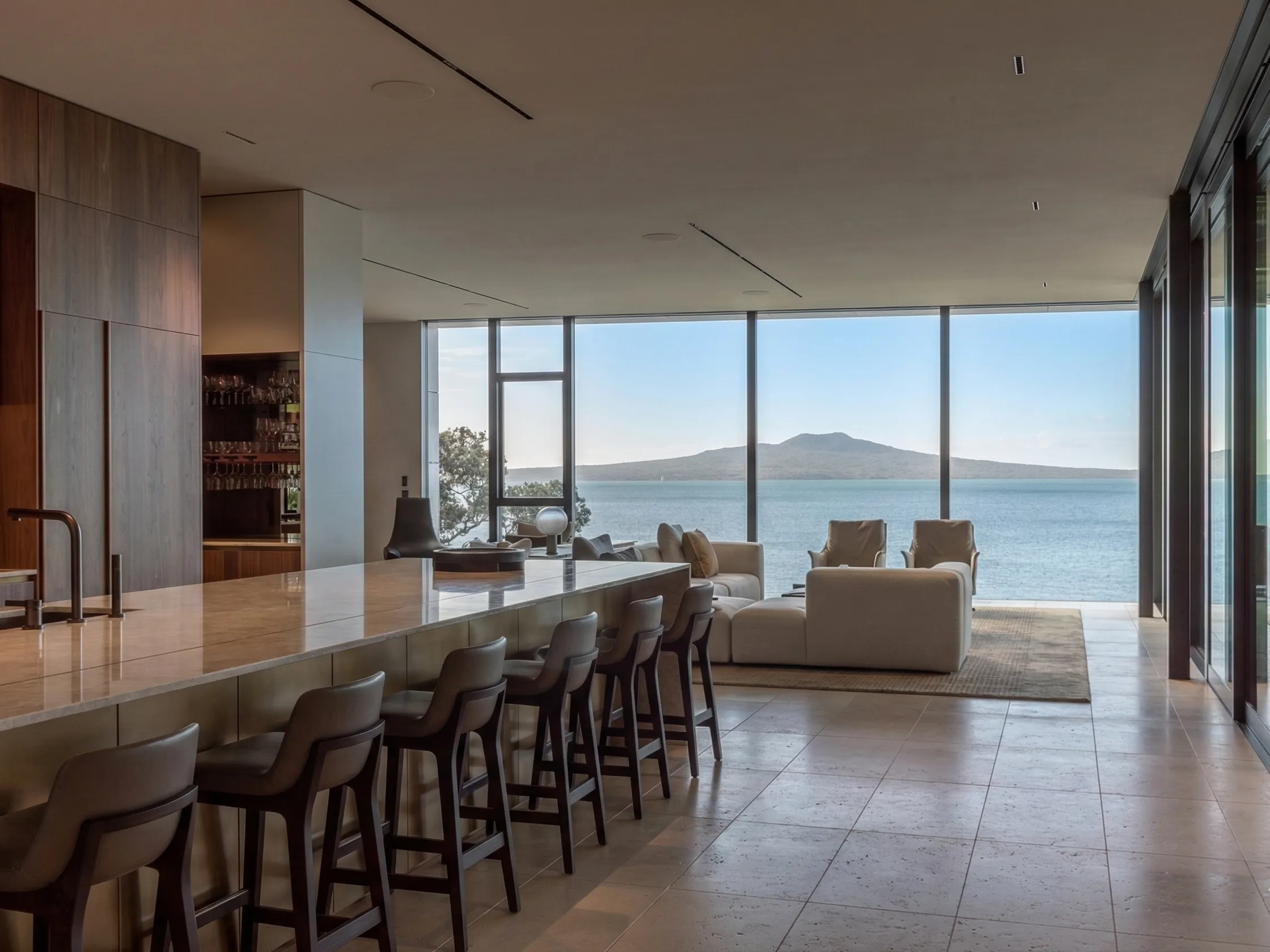
The last row is where limestone flooring earns its place: one material crosses the threshold and only the surface changes. One of our installed Grigio Olivo floors, in sandblasted & brushed, meets full-height glazing that opens onto a covered terrace, exactly the threshold where continuity pays off. Two conditions apply: the stone must be frost resistant where the climate demands it (Pasubio Beige, Grigio Olivo, and Grolla Beige are recorded as frost resistant), and the exterior needs falls and drainage designed in from the start.
Limestone flooring tile or slab: formats, thickness, and underfloor heating
Limestone flooring tile, cut to calibrated standard sizes, suits most residential rooms and is quicker to lay. Large format limestone flooring, whether large tiles or cut-to-size slabs, gives fewer joints and a calmer field, which is why it is favoured in open-plan and hospitality spaces. It also asks more of the installation.
Thickness follows format and use. Larger units and heavier loads need thicker sections. Agree thickness with the supplier against flexural strength, format, and substrate, rather than picking a nominal figure.
Substrate flatness. Large formats magnify any deviation in the screed, producing lippage and hollow spots. Specify a flatness tolerance and full-bed adhesive coverage.
Movement joints. Stone floors need perimeter and field movement joints, sized and located to the adhesive and screed manufacturers’ guidance and the applicable installation standard.
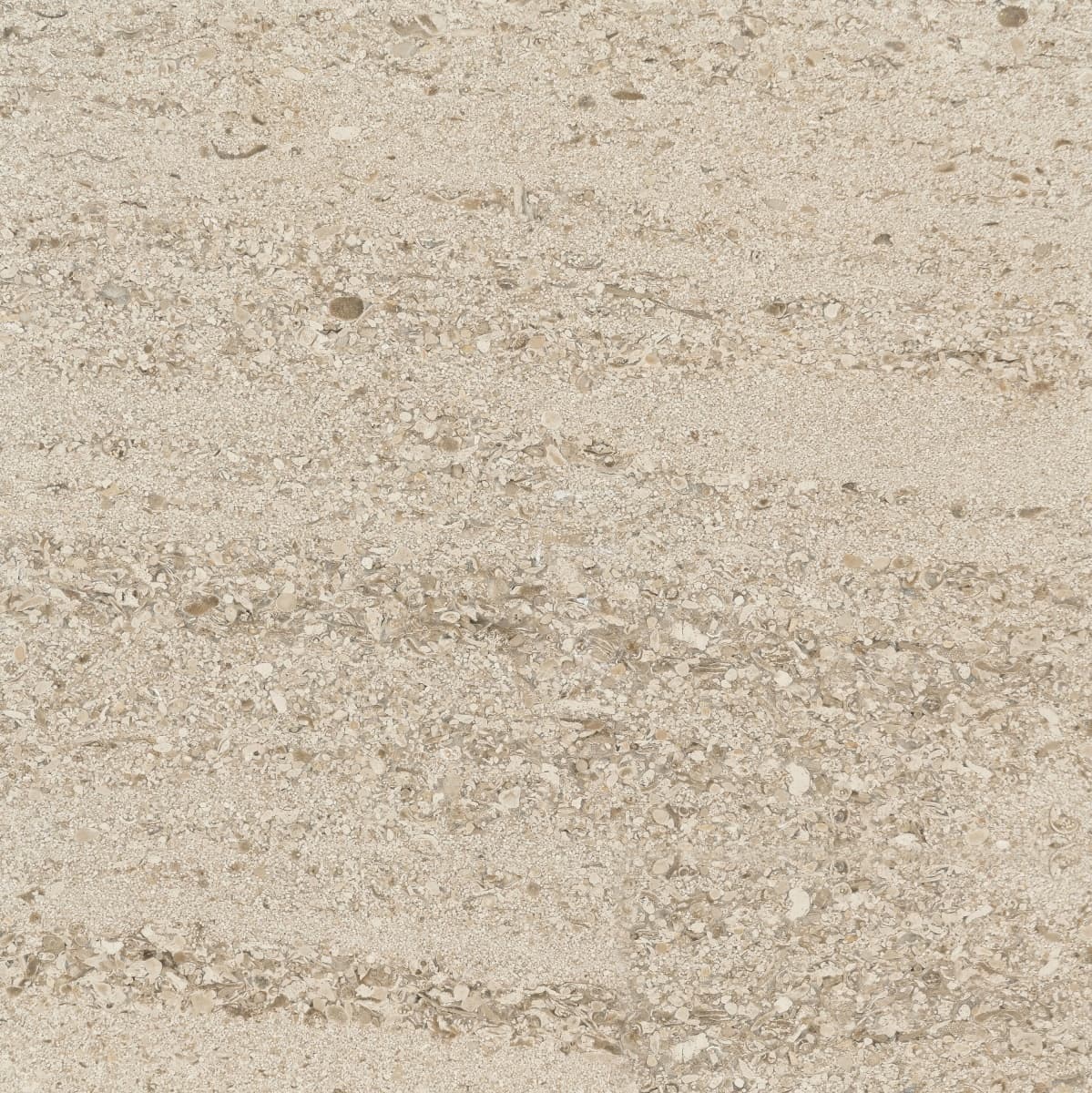
Laying direction and blending. For stones with directional pattern, such as the linear streaks of Moca Cream Classic, decide direction and blending at dry-lay, not on site.
Underfloor heating. Limestone works well with it, because stone holds and releases heat evenly. The risks are thermal movement and moisture. Specify adhesive and grout rated for heated floors, use an uncoupling membrane where the system designer recommends one, commission the heating to the manufacturer’s schedule before laying and again afterwards, and never use the heating to accelerate curing.
Sealing and maintaining limestone floors
Seal every limestone floor, with a breathable impregnating sealer rather than a topical coating. The sealer slows absorption so spills can be cleaned before they stain. It does not stop acid etching, which is a surface reaction with the calcite. We cover products, testing, and intervals in our guide to sealing natural stone, and routine care in our cleaning and maintenance guide. For the specification itself:
Seal after installation and grouting, once the floor is fully dry, and run a water-drop test before handover.
Specify pH-neutral cleaners in the operation and maintenance manual. Acidic and strongly alkaline products attack both the finish and the sealer.
Control grit. Entrance matting does more for a limestone floor than any product.
Re-seal on evidence, not by calendar. When water darkens the surface faster than it did at handover, it is time.
Plan for restoration. Honed and brushed limestone can be re-honed or re-brushed in place.
For heavy-traffic projects, our note on natural stone for hotel lobbies and high-traffic floors goes further.
Choosing a limestone for flooring: Portuguese, Italian, and Spanish
Our published limestones come from three countries, and origin is a useful first cut: each group has its own colour range and finish offering.
The stones below are examples from our published catalogue, not the limit of what we can source. We can source other limestones, quarries, finishes, and origins beyond what is currently published, so if the right stone is not listed, send us a project brief.
Portuguese limestone flooring
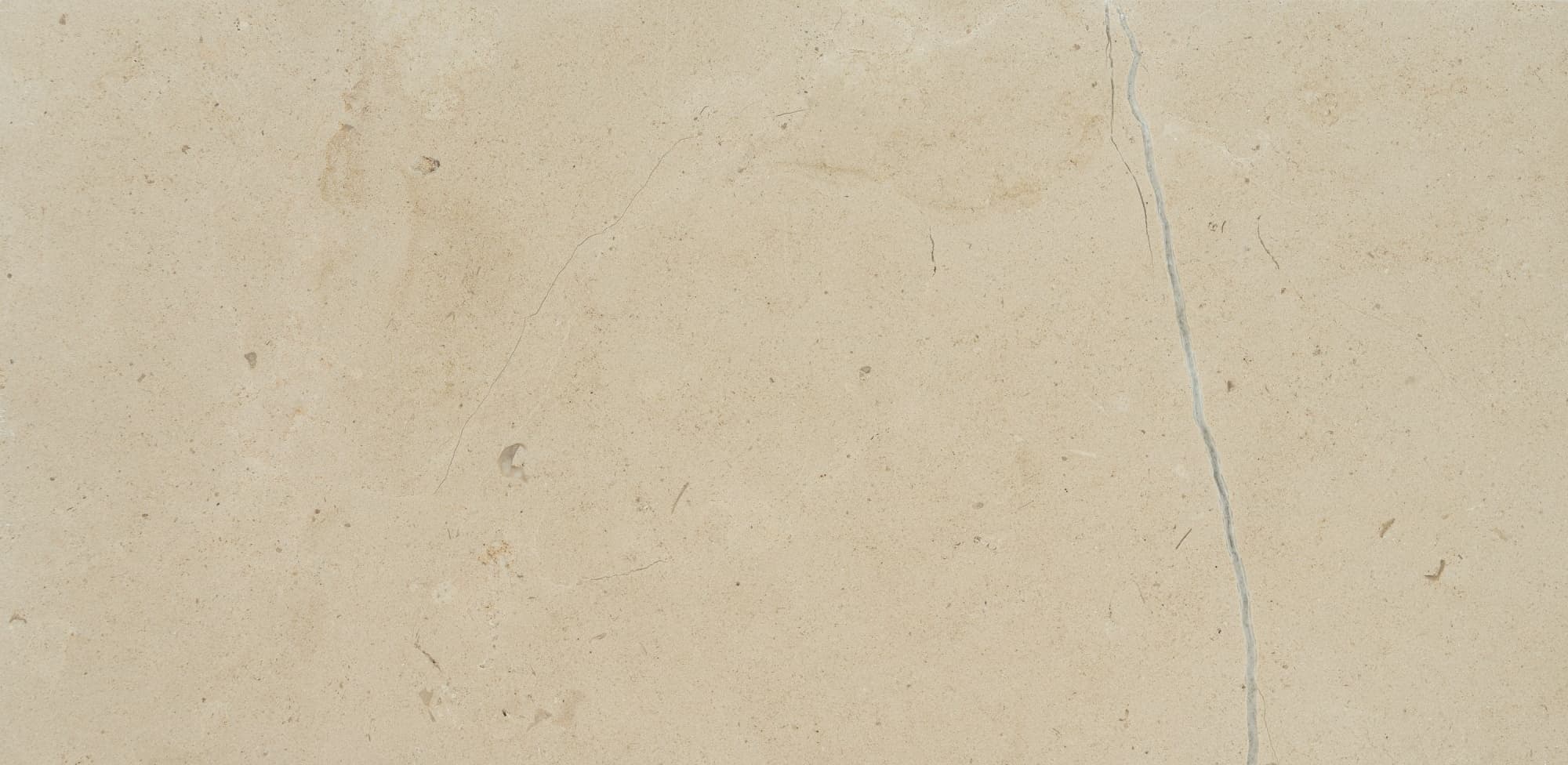
The Portuguese stones are mostly warm beiges, creams, and tans, and several offer a full range of floor finishes. Moleanos Fine Grain is the calm choice: a warm tan-beige with regular patterning and low variability between slabs, available honed, brushed, sandblasted, and tumbled. Moca Cream Classic is warmer and more linear, with streaked patterning that rewards thought about laying direction; it is offered honed and polished. Atlantic Beige has one of the broadest finish lists in the group, from honed and brushed to tumbled, sandblasted, flamed, and polished, a strong candidate for one stone running inside and out. Ataija Azul brings more character: a warm tan-brown ground with grey accents and cloudy, blotched patterning, in honed, brushed, flamed, and tumbled. For a paler floor, Atlantic White is a light warm beige with soft accents, in honed or sandblasted. Our Portuguese limestone guide goes deeper on these families, and we profile Moleanos limestone, Atlantic limestone, and Ataija Azul individually.
Italian limestone flooring
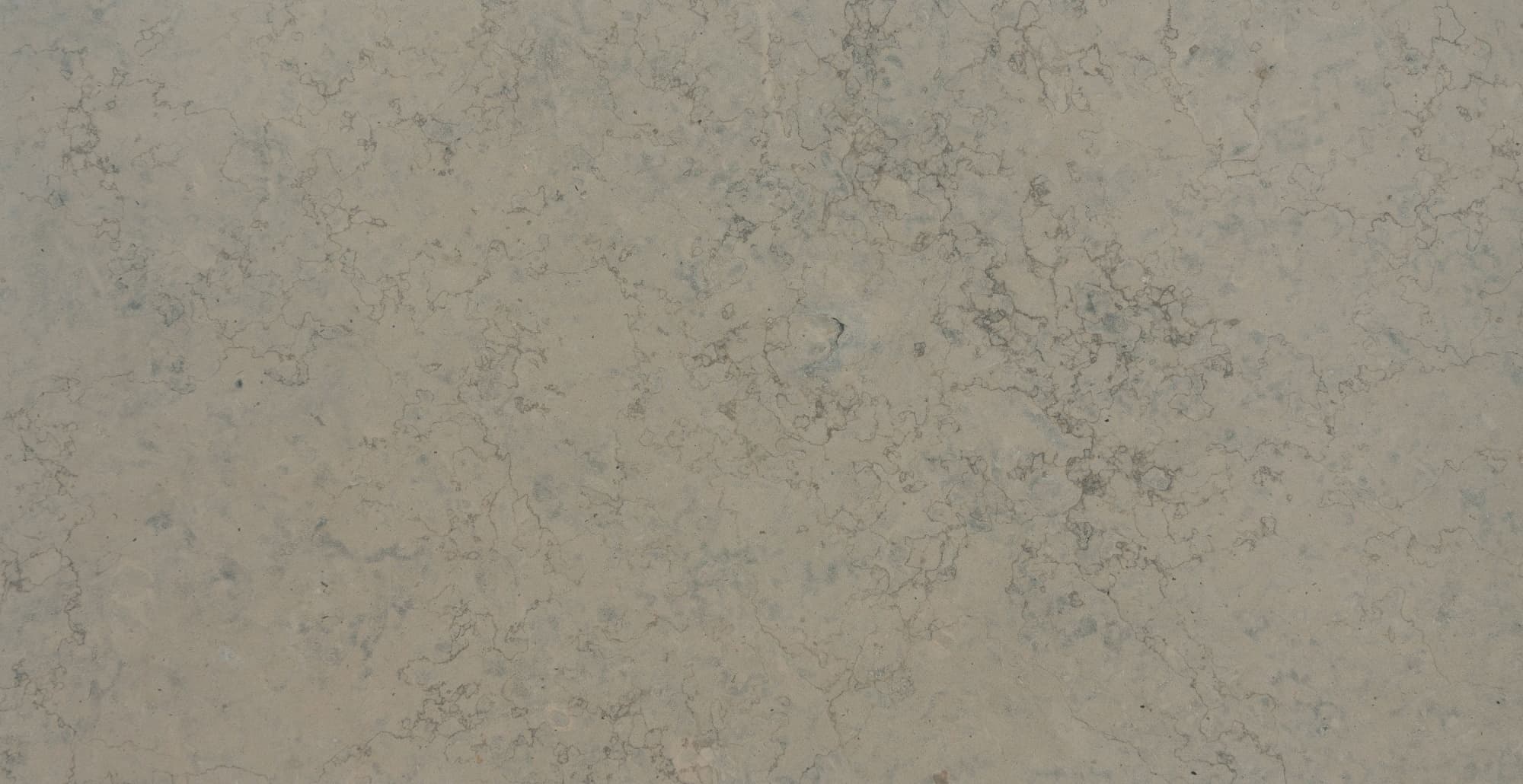
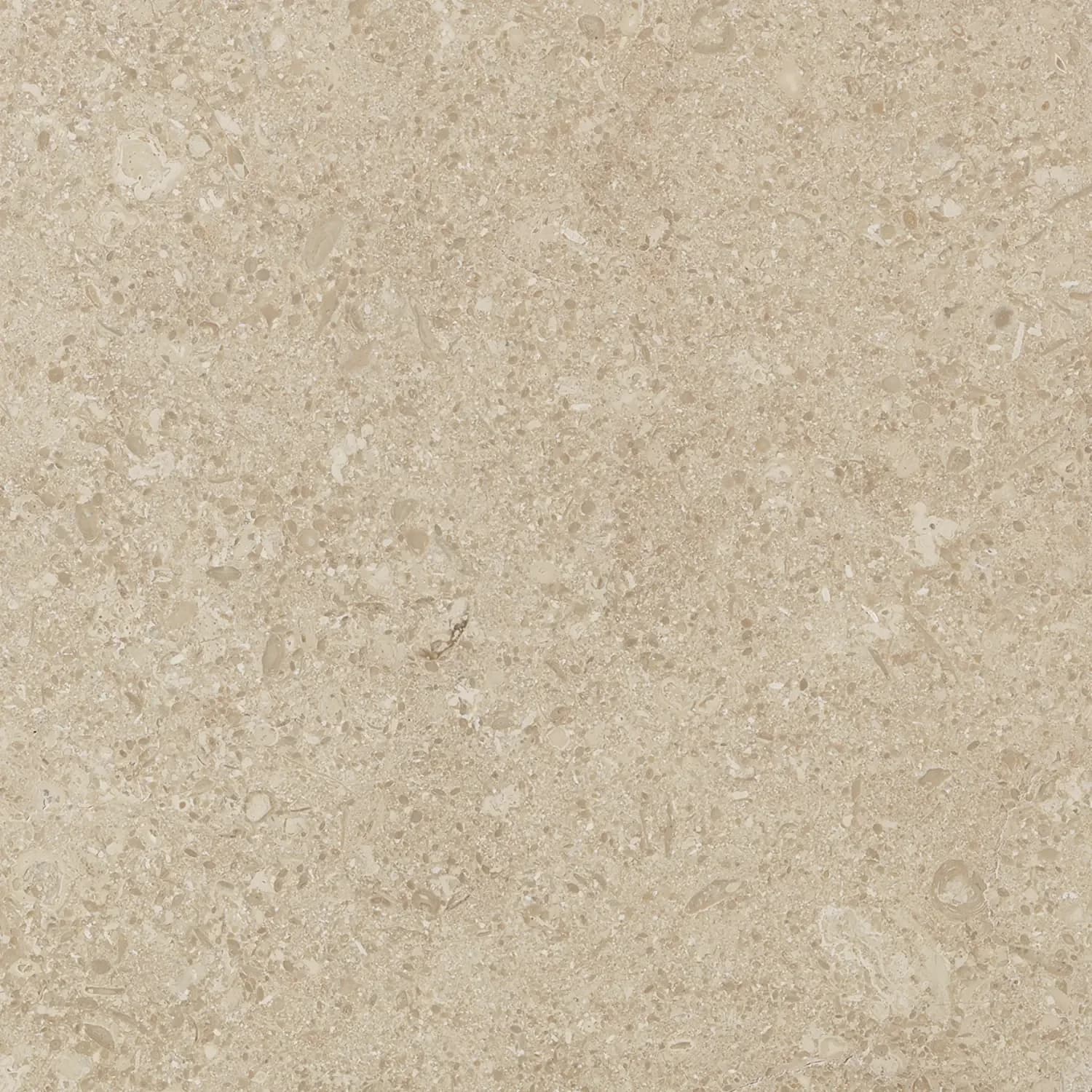
The Italian stones are where our technical data and installed photography run deepest. Pasubio Beige is a solid, regular beige with low porosity and recorded frost resistance, and a 21-finish list that runs from honed and brushed to sandblasted & brushed, bush-hammered, and flamed. Grigio Olivo, despite its name, is recorded as a warm tan-beige with solid, regular, and blotched patterning; it carries 43 finish options in our catalogue, frost resistance, and installed photography across interior floors, wet areas, and exterior paving. Grolla Beige is a warm beige with blotched and veined movement, 35 finishes, and recorded frost resistance. Our Grolla limestone profile compares Grolla Beige with its Rosato and Terrazzo variants.
Spanish limestone flooring
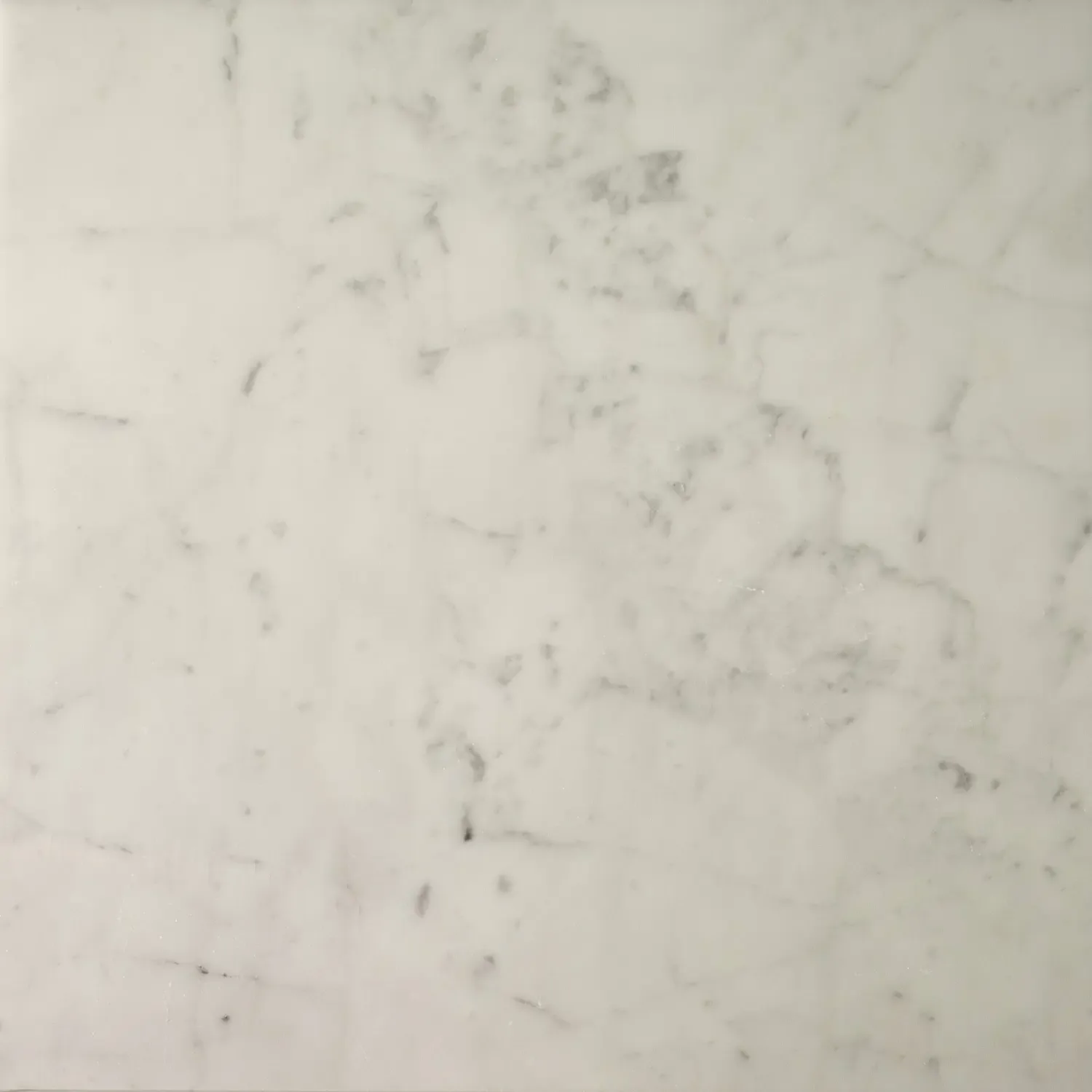
The Spanish group adds the cooler and paler end of the range. Azul is a cool grey-blue with regular patterning and low variability, offered honed, Envejecido (aged), and Rayado (scratched): a good fit for contemporary schemes that want a cool, even floor. Atria is a warm tan with blotched, random patterning and low variability, in honed or Envejecido. Dafenqi is a warm white with cream accents and regular patterning, the natural starting point for white limestone flooring, available honed and in a Piel finish. As with the Portuguese stones, request test certificates with the samples.
A short decision path:
Warm or cool? Warm: the Portuguese beiges and creams, Grigio Olivo, Grolla Beige, Atria. Cool: Azul.
Calm or characterful? Calm: Moleanos Fine Grain, Pasubio Beige, Azul, Dafenqi. Character: Ataija Azul, Moca Cream Classic, Grolla Beige.
Inside only, or inside and out? For continuity, choose a frost-resistant stone with a textured exterior finish. On current data that means Pasubio Beige, Grigio Olivo, or Grolla Beige; others once test data for the specific bed is in hand.
How much data does the specification need? If certificates are needed up front, start with the stones that already have recorded figures.
Weighing limestone against travertine? Travertine is itself a form of limestone, deposited by mineral springs rather than marine sediment, so it shows natural voids and banding where most limestones read calmer. Our travertine vs limestone comparison covers how the two differ for floors, bathrooms, and pool decks.
What drives the cost of limestone flooring
There is no single price for limestone flooring. Two floors in the same stone can be priced very differently, because the cost is built up from decisions this guide has already covered:
Stone, grade, and selection. The same limestone is often sold in more than one grade. A tight selection for colour and low variability, or stone from a named bed, costs more than a commercial mix, and some stones are simply scarcer than others.
Origin and logistics. Where the stone is quarried and processed, how it is packed and shipped, and how far it travels to site all feed into the delivered cost.
Format and thickness. Large formats and cut-to-size slabs need larger, sounder blocks and more careful handling than standard calibrated tiles, and thicker sections use more stone.
Finish. Honed is the usual starting point; brushed, sandblasted & brushed, tumbled, and bush-hammered faces add processing steps.
Waste and matching. Directional or veined stones, blending at dry-lay, and sequence-matched layouts all increase the allowance you need to order over the net floor area.
Substrate and installation. Screed flatness, uncoupling membranes, underfloor heating, movement joints, and large-format laying can affect the installed cost as much as the stone does.
Sealing and maintenance. Impregnating sealer at handover, periodic re-sealing, and occasional re-honing belong in the life-cycle cost of the floor, not only in the initial budget.
The fair comparison is between quotations for the same stone, grade, format, thickness, and finish. Lithos compares current quotations through a project brief, so you can see where the differences actually come from.
How Lithos works
Lithos is a private natural stone sourcing studio for architects and interior designers, working on residential, hospitality, and commercial projects. We enter the work where it is useful: material direction, specification support, sourcing and comparison, and procurement coordination. On a limestone floor, that means translating the design intent into a focused set of stones, compared on colour, movement, finish, and scale, then testing that choice against the application: absorption, slip, freeze-thaw exposure, thickness, format, fabrication, and maintenance.
We reach quarries, importers, fabricators, and suppliers directly to compare current lots, samples, and availability, and our recommendations are shaped by the project, not by stock on hand. We also coordinate finish samples on your actual candidate stone, so honed, brushed, and textured faces can be compared side by side.
The scope follows the project. Some engagements stop at material direction and specification; others continue through samples, quotations, procurement, and delivery coordination. A short project brief covering the intent, applications, constraints, timing, and any stones already under consideration is enough to begin. Every brief is reviewed personally, and client names, budgets, and briefs stay private.
Specifying limestone flooring for your project
A good limestone floor is the sum of stone, bed, finish, format, and maintenance regime. Sample the specific stone in the specific finish, view it wet and dry in the light of the space, and tie the specification to tested figures.
If you are specifying limestone flooring for a project, start a project brief and we will match stone, finish, and format to each zone, with samples of the shortlisted limestones and the technical data we hold for them.


Notes from the studio
Occasional essays on material, sourcing, and the quiet craft of specifying stone. No noise.